

Picture the first few weeks of retirement. The diary is clear, the commute has gone, and there is finally time for the things work kept pushing aside. For many people, those early months feel like a long-overdue exhale.
But after a while, something else often becomes clear. The people you once spoke to every day are still at their desks. The rhythms that shaped the weeks have disappeared. And the social life that once felt effortless – built quietly into working life – suddenly needs to be rebuilt.
This is one of the least discussed realities of retirement.
Around 4.3 million people aged 65 and over in the UK live alone, and loneliness is significantly more common among those who do not. Studies suggest around 37% of people living alone report loneliness, compared to 19% of those who do not. Hundreds of thousands of older adults go days without speaking to anyone.
Retirement does not automatically create loneliness. But it can remove the everyday structures that once made connections easy.
The encouraging news is that social life in retirement can become richer than it has been for years. Much depends on the environment you are in – and the habits you build around it.
The loneliness epidemic in later life
Loneliness is now recognised as a serious public health concern, with effects that extend far beyond emotional wellbeing. Research links chronic loneliness to increased risks of heart disease, stroke, and depression, while its impact on mental health is widely documented.
Older adults can face a particular combination of risk factors. Bereavement, retirement, changes in mobility, and the gradual shrinking of social networks can quietly narrow a person’s world. Friends pass away, children move elsewhere, and everyday routines change.
Each shift on its own may feel manageable. Over time, however, the cumulative effect can lead to isolation.
Age UK reports that over a million older people in the UK often feel lonely, potentially increasing to 2 million by the end of 2026. Research also shows that People aged 50 and over are more likely to be lonely if they:
- Do not have someone to open up to
- Are widowed
- Are in poor health
- Are unable to do the things they want
- Feel that they do not belong in their neighbourhood
- Live alone
The challenge is rarely ageing itself. It is the loss of the daily structures that once made connections feel automatic.
Why loneliness in retirement is more common than we think
For much of working life, social interaction happens naturally. Conversations with colleagues, shared projects, meetings, and the small exchanges of daily work all create a steady rhythm of human contact.
Most people never think of this as their ‘social infrastructure’. It simply feels like normal life.
When it disappears, the gap can be larger than expected. What is lost is not only conversation but also routine, shared purpose, and a sense of belonging.
Other life transitions can deepen the shift:
- Children leaving home
- The death of a partner
- Relocating to a new area
- Mobility changes that make getting out less straightforward
When retirement requires – and what many people do not initially realise – is a more intentional approach to social life. The environments that once created connections automatically are gone, so new ones must take their place.
This is where where you live begins to matter greatly.
How retirement communities make socialising easier
Well-designed retirement communities work socially because they recreate those everyday opportunities for connection.
Shared dining spaces, gardens, libraries, wellness studios, and events programmes are not simply amenities – they are the infrastructure of community life.
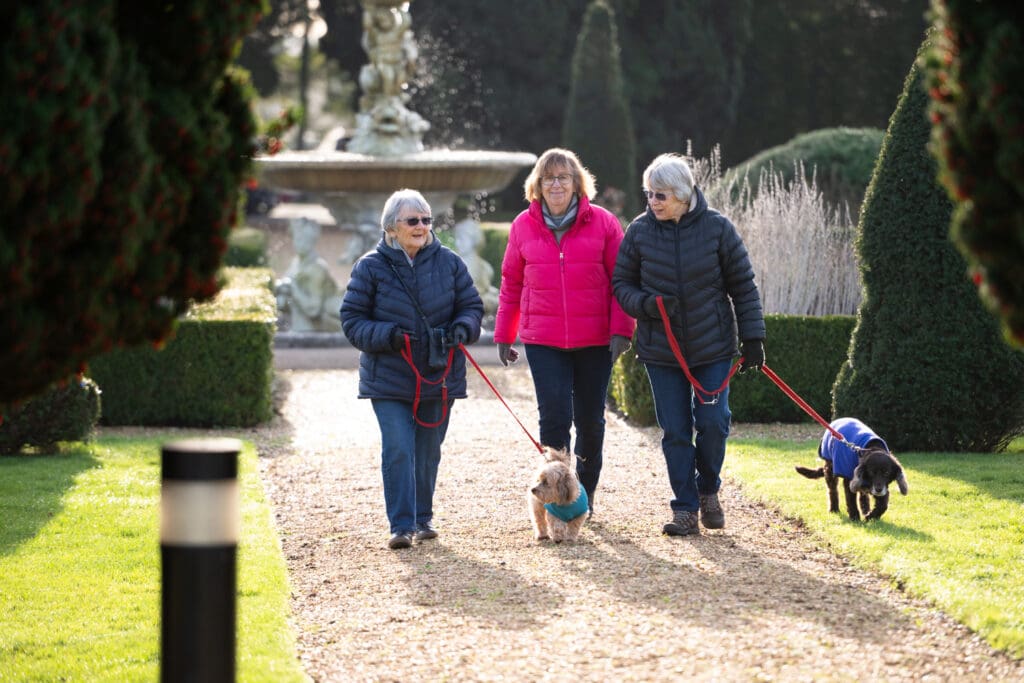
Residents do not need to organise complex plans or actively seek out new friendships. They simply attend a class, enjoy breakfast, walk in the gardens, or join an evening talk. Over time, familiar faces become acquaintances, and acquaintances become friends.
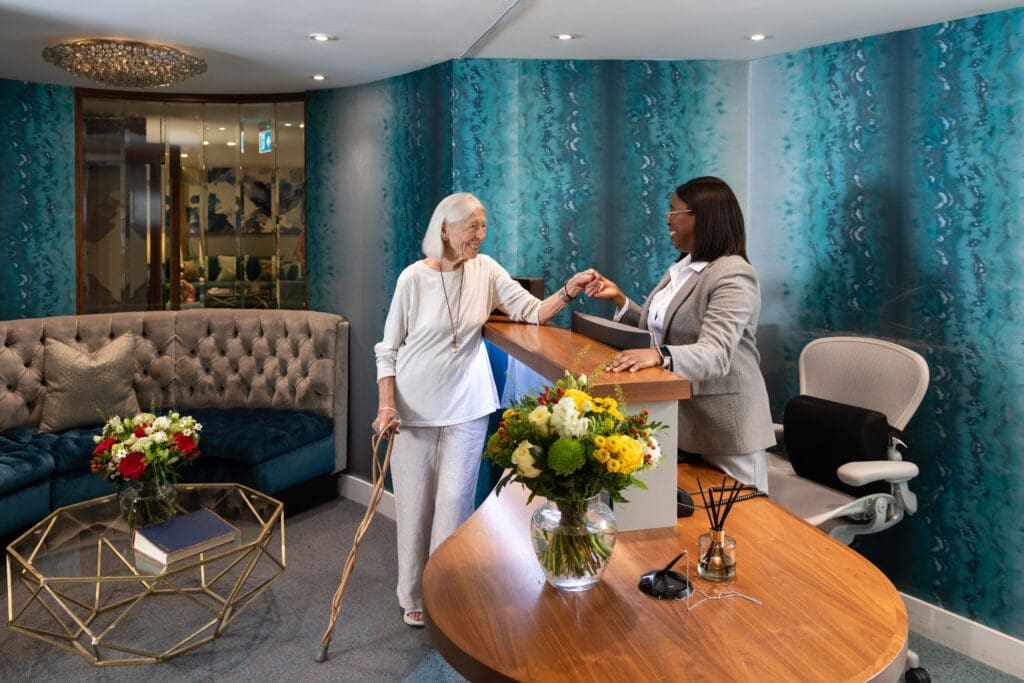
At LifeCare Residences communities – Battersea Place in London and Grove Place in Hampshire – the social calendar is varied and engaging. But just as important is the everyday atmosphere: welcoming shared spaces, a dining room people genuinely enjoy using, and activities shaped by residents’ interests.
It is the regular, low-pressure opportunities to spend time together that allow friendships to develop naturally.
Who actually lives in retirement communities?
Many people still imagine retirement communities as quiet, institutional places. In reality, modern retirement living is very different.
Today’s residents are former professionals, entrepreneurs, teachers, artists, travellers, and volunteers. Many are in their late 60s or early 70s – active, curious, and engaged with the world.
Independent living means exactly that: your own home, your own front door, and complete freedom over how you live your life.
The difference is that there is far more happening around you than there might be in a large house managed alone.
People do not move into retirement communities because life is winding down. More often, they move because they want more life, not less.
“I don’t think there is anything better than living here. It’s confidence – you get confidence that you can cope with life.” – Battersea Place resident
Retirement activities that help people connect
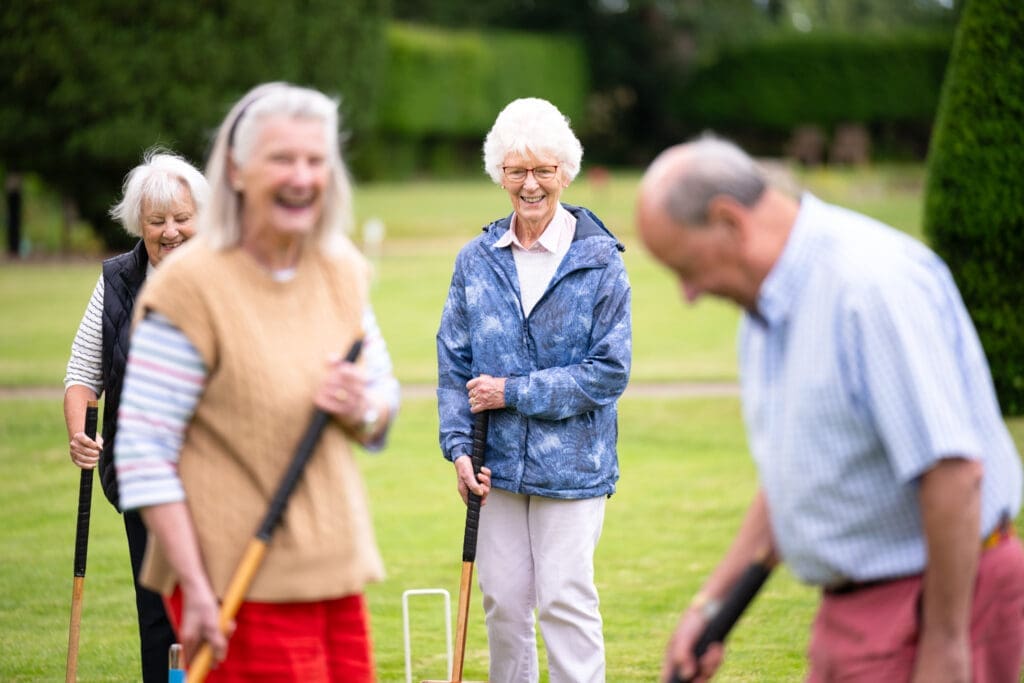
Not every activity builds connection equally well. The ones that tend to work best are regular enough to build familiarity, involve a shared interest, and are enjoyable enough that people return week after week.
Some examples include:
- Yoga or pilates classes – Regular classes bring the same faces together in a relaxed, communal environment
- Walking groups – Combining light exercise, fresh air, and conversation often leads to easy, natural friendships
- Book clubs – A shared book gives people something to discuss before they know each other well
- Film evenings – Watching together creates a shared experience and an easy starting point for conversation
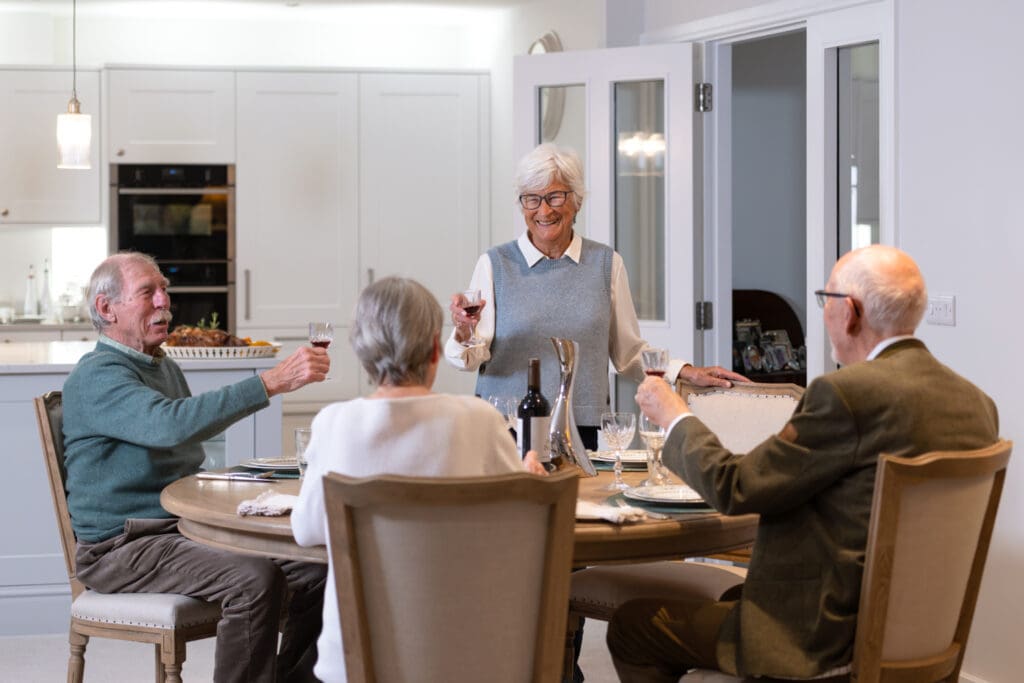
- Wine tastings – These relaxed gatherings often make conversation flow naturally
- Gardening groups – Practical activities are ideal for people who prefer conversation to arise naturally rather than formally
- Guest talks and lectures – Communities that host interesting speakers often find that these evenings become lively social events
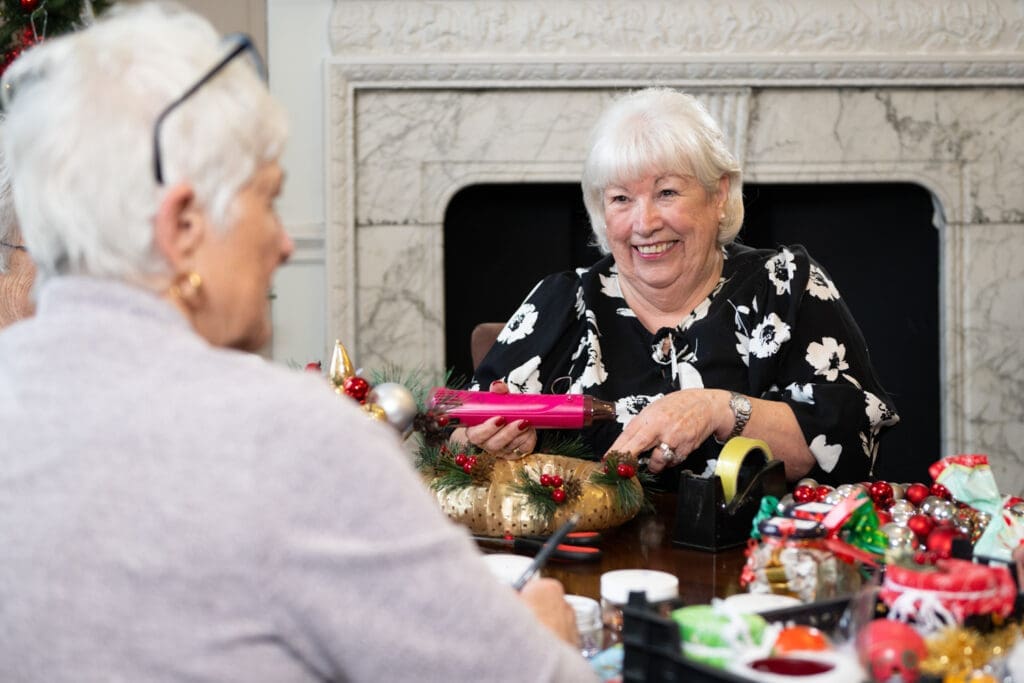
- Art or craft workshops – Working together on creative projects creates relaxed time for conversation and familiarity
Example retirement activities calendar
A typical month in a LifeCare luxury retirement village includes a mix of cultural events, social gatherings, outings, and relaxed everyday activities. Residents can join as much or as little as they wish.
Here is a snapshot from a recent monthly calendar at Battersea Place and Grove Place:
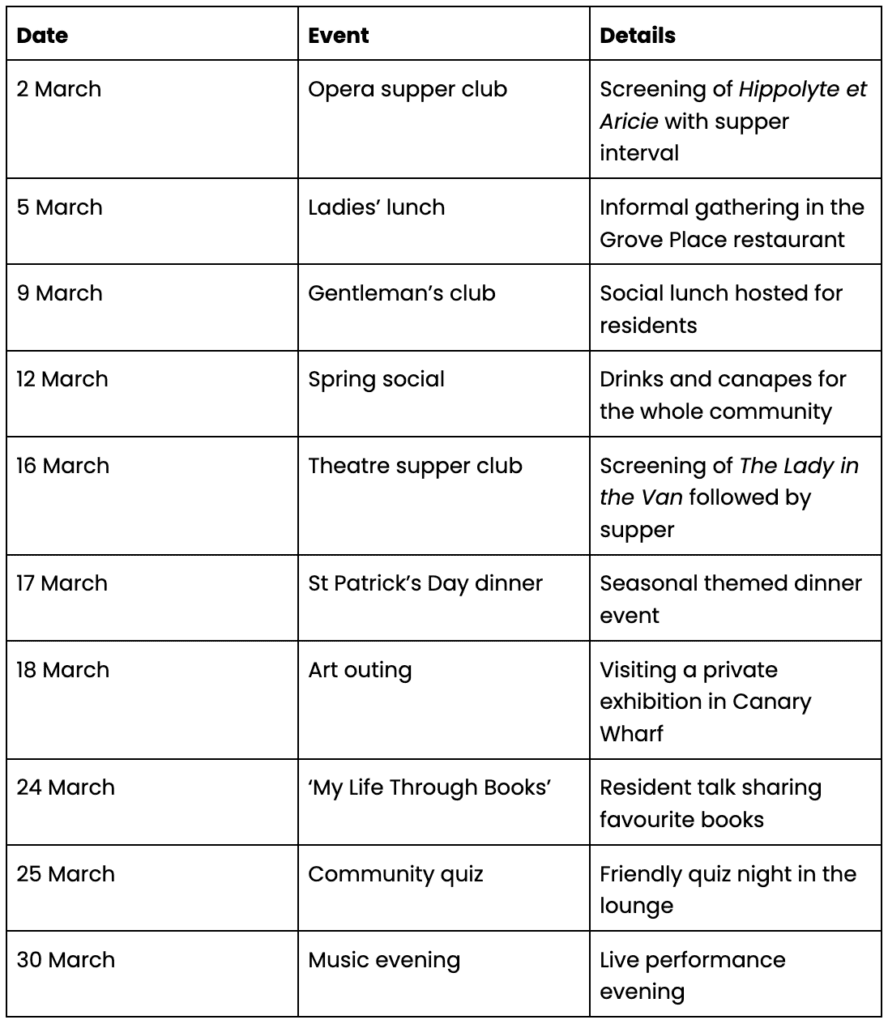
The programme changes every month and is shaped by residents’ interests. Events range from cultural talks and cinema nights to fitness classes, gardening groups, outings, and seasonal celebrations.
The aim is not to fill every moment, but to ensure there are always opportunities to spend time together, discover new interests, or simply enjoy good company when the mood strikes.
Resident stories: Finding a social life in retirement
For many people, one of the biggest concerns before moving to a retirement community is whether it will feel socially vibrant or isolating.
Residents often find the opposite is true: the opportunity for connection is greater than they expected.
One resident at Grove Place describes the social atmosphere and activities on offer:
“Everyone is so friendly and relaxed. I love the social time with activities – craft, bridge, croquet, mini golf, boules, skittles, film shows, outings, and wonderful themed events, plus the choir and art classes and a well-stocked library.”
Another resident at Battersea Place explains how the community aspect made the transition easier than expected:
“For me, it has been the best decision I have made. I am with a group of residents who are happy to join in on the varied entertainment on offer.”
Many residents also encourage others to make the move sooner rather than later:
“Grove Place is so welcoming and full of warmth. I would seriously advise people to move here while they are still young enough to enjoy everything that is on offer.”
These experiences reflect something many residents discover over time: when the environment is designed for connection, friendships tend to grow naturally.
How to recognise a genuinely social retirement community
If you are visiting a retirement community and trying to understand what daily life is really like, the most valuable thing you can do is simply observe.
- Are residents naturally talking with each other?
- Are shared spaces actively used throughout the day?
- Does the events programme reflect a range of interests and energy levels?
Most importantly, ask yourself a simple question: do the people you meet feel like people you could enjoy knowing?
A few useful questions to ask during a visit include:
- How did the social calendar develop – was it shaped by residents?
- Can residents participate as much or as little as they wish?
- How long do people typically take to settle in?
- Is there a residents’ committee or community involvement?
The answers that matter most are rarely in the brochure. They are in the everyday atmosphere of the place itself.
Retirement is not a withdrawal – it can be a reset
For a long time, retirement was often described as a gradual retreat from work, activity and social life.
That picture is changing.
With the right environment, retirement can become a time when friendships deepen, interests expand, and community becomes more central to everyday life. Many people living in well-designed retirement communities describe their social lives as richer than during their working years – more varied, more relaxed, and more intentionally chosen.
Connection rarely happens through effort alone. It grows from the ordinary, repeated encounters that the right setting makes possible.
If you are curious about what that could look like, the best way to understand it is to visit.
At LifeCare Residences, we would be delighted to arrange a private tour of Battersea Place or Grove Place, so you can experience the atmosphere and community for yourself.